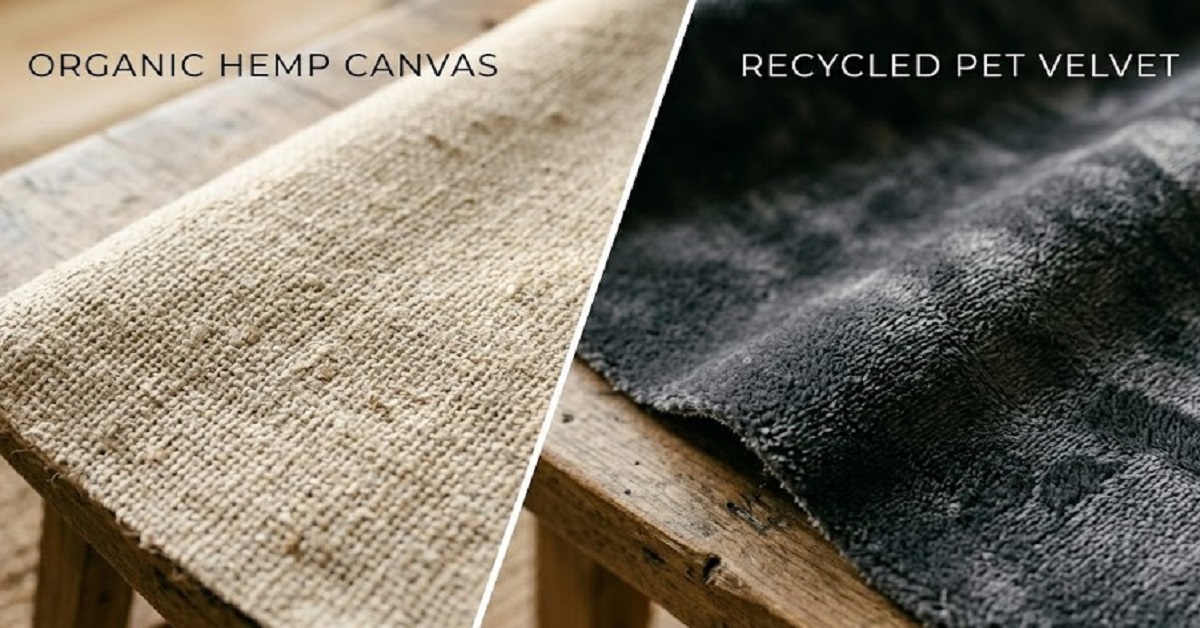
Eco-Friendly Upholstery Fabrics for Pets: If you’ve ever come home to claw marks on your favourite armchair, you know exactly what I’m talking about. Or maybe it’s the mystery wet patch on your sectional. Either way choosing upholstery when you share your home with cats or dogs is hard. Add “eco-friendly” to the list and it can feel nearly impossible.
We’ve spent years at Echoshopbd helping pet owners find furniture that lasts, respects the planet, and survives everything a Labrador can throw at it. This guide is built from that experience real conversations with real customers, plus what we’ve seen hold up (and fall apart) on our showroom floor. Let’s get into it.
Why regular upholstery fails pet owners — and the planet
Most standard upholstery fabrics are treated with synthetic chemical coatings. Stain repellents, flame retardants, heavy dyes — they work fine in a human-only home. But when a curious dog spends three hours gnawing a cushion corner? Not ideal.
There’s also the environmental side of things. Conventional polyester and vinyl shed microplastics, carry high manufacturing carbon footprints, and end up in landfill when they finally give out. Here’s the thing — better options genuinely exist. And they don’t ask you to compromise on durability or style.
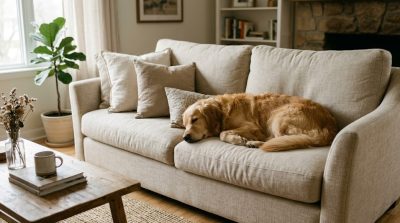
The 5 best eco-friendly upholstery fabrics for pets
Not all sustainable fabrics are equal when pets are involved. We’ve seen plenty of “natural” options fall apart within a year. These are the ones that actually perform.
A plant-based base fabric with a non-toxic, water-based barrier treatment. Resists moisture and odours without any VOCs. The weave is tight enough to shrug off minor claw snagging — a win on both fronts.
Made from post-consumer plastic bottles melted into ultra-fine fibres. Dense pile = scratch-resistant. Slick surface = pet hair doesn’t embed the way it does in woven textiles. We recommend this one a lot.
Hemp grows without pesticides, uses far less water than cotton, and produces a heavy-duty canvas that’s genuinely hard to damage. A double-rub count above 30,000 is typical for a good hemp canvas — that’s serious longevity.
Naturally moisture-wicking and antimicrobial. Look for GOTS-certified wool to be sure about ethical sourcing. It does need professional cleaning, so factor that in before you commit.
Bamboo-cotton blends offer a softer hand feel with solid tensile strength. Bamboo is a fast-growing, low-input crop — one of the more sustainable fibres you can buy at a mid-range price point.
A linen face with a natural cork backing adds moisture resistance and structural integrity. Uncommon, but increasingly available through speciality suppliers — and genuinely beautiful in a room.
What to look for on the label: certifications that actually matter
The sustainable fabric space has a real greenwashing problem. A fabric labelled “natural” can still contain formaldehyde-based finishes. These are the certifications worth trusting — and we check for them on every product we stock.
- GOTS (Global Organic Textile Standard) — covers both the fibre and the processing stage. If it’s GOTS-certified, you can trust the whole supply chain, not just the raw material.
- OEKO-TEX Standard 100 — tests for over 100 harmful substances. Every component — buttons, thread, lining — has to pass, not just the face fabric.
- Bluesign — focuses on resource efficiency and chemical safety during manufacturing. You’ll see this on a lot of performance-grade sustainable fabrics.
- Cradle to Cradle — evaluates recyclability and end-of-life impact. A C2C-certified fabric is designed to be recovered and reused, not just buried.
When in doubt, ask your supplier for the certificate number. Legitimate certifications are always traceable. If they can’t provide it, that tells you something.
What we’ve seen actually work from our own showroom
I want to be honest with you about something. The fabrics that hold up best in pet households almost always share one quality: a tight, high-thread-count weave with short or no pile. Bouclé looks stunning. But a Bengal cat will unravel a cushion in a week. Velvet with a pile height above 3mm traps hair in a way that defeats even the most committed lint-roller.
One customer came to us after her third sofa in five years. She had a chocolate lab and two rescue cats. We suggested a hemp-canvas sectional with an organic cotton slipcover. Two years on, that piece still looks like new. The slipcover goes in the washing machine every month — no professional cleaning, no fuss.
That’s the kind of solution we’re always trying to find. Not just something that looks good on paper, but something that actually works for how people live.
How to test an eco-friendly fabric before you commit
Most upholstery retailers offer sample swatches. Always ask for one. Here’s a quick test you can run at home before you place an order — we actually walk customers through this in our showroom.
- The scratch test. Drag your fingernail at an angle across the fabric. Immediate pilling means it won’t last long with a cat. You want the surface to stay smooth.
- The water droplet test. Drop a small amount of water on the swatch. If it beads and rolls off, there’s inherent or applied moisture resistance. If it soaks in within 30 seconds, you’ll need to budget for regular fabric treatment.
- The hair test. Press a small piece of tape to the swatch, then lift it. If pet hair is already embedded after just resting the swatch on your sofa, that weave will be a nightmare to keep clean.
- The smell test. New fabrics shouldn’t smell strongly chemical. A sharp synthetic odour often means solvent-based finishes — not ideal if your pet chews or licks the furniture.
If you’re reupholstering existing furniture, ask your upholsterer to skip standard polyurethane foam and use a natural latex or recycled soy-foam insert instead. These alternatives are biodegradable, don’t off-gas, and — here’s what most people miss — they don’t absorb pet odours the way conventional foam does. A fabric can be perfectly clean while an old foam core still smells. Replacing the foam is the upgrade that nobody mentions but almost everyone needs.
The slipcover strategy: a smarter middle ground
Here’s an approach more pet owners should consider. Invest in a quality base sofa, then use a washable, eco-certified slipcover as your working surface. It costs far less than a full reupholstery job. The sustainable fabric facing daily pet traffic just gets washed or replaced — the structural piece underneath stays untouched.
Organic cotton slipcovers with a tight sateen weave are our go-to recommendation. Soft enough to be comfortable, durable enough to be practical, and machine washable at 60°C — which is the temperature you actually need to neutralise pet allergens, not just freshen things up.
What about leather? The honest answer
We get this question a lot. Genuine leather is often sold as a natural, durable choice — and in terms of scratch resistance, it does hold up reasonably well. But it’s not eco-friendly by any meaningful standard. Conventional tanning uses chromium salts and enormous volumes of water. The carbon footprint of cattle-derived materials is significant. We won’t pretend otherwise.
Plant-based leathers — apple, cactus and cork are improving. But most current versions still aren’t durable enough for heavy pet use. Delamination and cracking are real issues. If you’re set on the leather look, a certified recycled leather product is currently the most honest option we can point you towards.
How to keep eco fabric looking good for longer
Even the best sustainable fabric needs a bit of regular care. These habits make a real difference — and they don’t take long.
- Vacuum upholstery weekly with a soft brush attachment. This stops pet hair and dander from working into the weave before they get the chance to settle.
- Treat liquid accidents within the first 60 seconds. Blot — don’t rub. Rubbing drives moisture deeper into the fibre and spreads the stain sideways.
- Re-apply a plant-based fabric protector every six months on natural fabrics like cotton and linen. Look for beeswax or carnauba wax-based options — they work without the chemical load.
- Rotate loose cushions regularly to spread the wear. It sounds simple. Most people don’t do it. The difference over two years is significant.
- Keep humidity in your home between 40–55%. Too much moisture weakens natural fibre weaves over time and can encourage mildew in organic materials — especially in warmer climates.
Buyer’s checklist: before you choose an eco-friendly pet upholstery
- Does it carry a GOTS or OEKO-TEX Standard 100 certification?
- Is the weave tight enough to resist claw snagging? (Aim for a double-rub count of 25,000 or above.)
- Can it be spot-cleaned with water and mild soap without damage?
- Is the pile height short (under 2mm) or zero pile, so pet hair doesn’t embed?
- Have you requested a swatch and run the scratch, water, and hair tests at home?
- Have you confirmed what the foam or padding insert is made from?
- Is there a slipcover option so you can extend the life of the piece?
- Does the care label allow machine washing at a temperature that actually kills pet allergens?