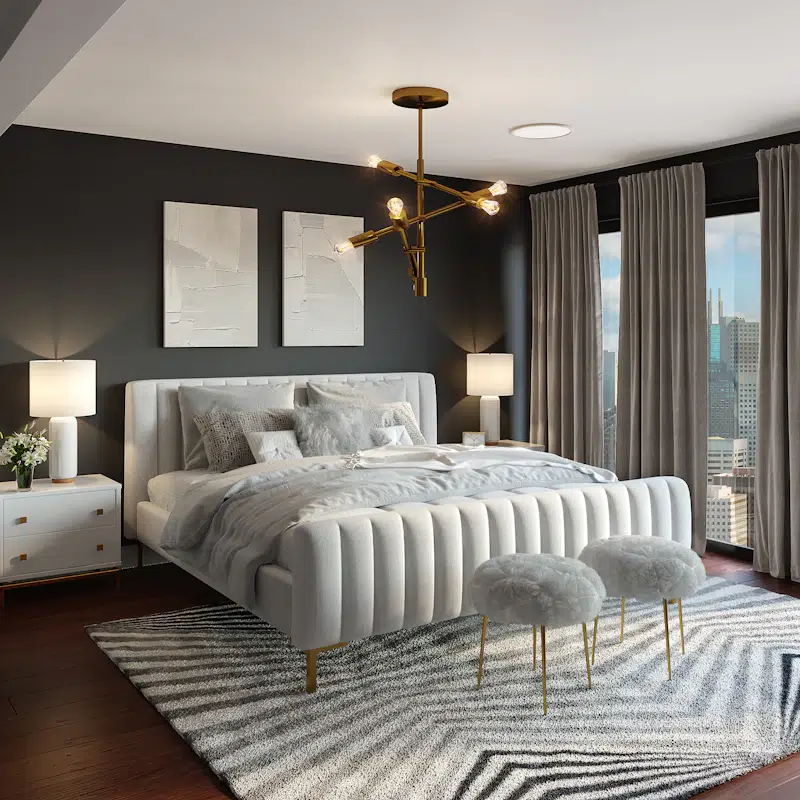
When you are planning a bedroom layout, getting the right wardrobe shelving depth is one of the most important decisions you will make. It is not just about fitting your clothes. It is about how you live, how easily you access your things, and how much usable space you actually get from your closet. As a carpenter who has spent 18 years cutting, sanding, and assembling everything from grand walk-in closets to compact reach-in wardrobes, I can tell you that a few inches here or there makes a world of difference. This practical guide will walk you through the specifics of shelving depth for both walk-in closets and reach-in wardrobes, ensuring your clothes fit perfectly and your space works for you.
- For hanging clothes, aim for a minimum of 24 inches (61 cm) depth in a walk-in, but you can get away with 20 inches (51 cm) in a reach-in if you use slim hangers.
- Folded items and shoes need less depth. Think 12 to 16 inches (30 to 41 cm) for shelves.
- Always measure your actual garments and hangers before cutting wood. Don’t guess.
| Feature | Walk-in Closet Shelving | Reach-in Wardrobe Shelving |
|---|---|---|
| Typical Depth for Hanging Clothes | 24 to 30 inches (61 to 76 cm) | 20 to 24 inches (51 to 61 cm) |
| Typical Depth for Folded Items/Shoes | 14 to 18 inches (36 to 46 cm) | 12 to 16 inches (30 to 41 cm) |
| Space Requirement | Needs a dedicated room or large alcove, minimum 6×6 feet (1.8×1.8m) overall. | Fits into an existing wall cavity, often 24 to 30 inches (61 to 76 cm) deep overall. |
| Customization Potential | High. Allows for islands, multiple hanging rods, varied depths. | Moderate. Limited by existing structure, but can be highly efficient. |
| Lifespan (Solid Wood) | 30+ years with proper care. | 30+ years with proper care. |
| Estimated Cost (2026, solid wood custom build) | $3,500 to $15,000 USD / BDT 400,000 to 1,750,000 | $1,200 to $5,000 USD / BDT 140,000 to 580,000 |
### Understanding Shelving Depth: The Basics
Alright, let’s get down to the brass tacks. The main reason we even talk about shelving depth is simple: your clothes. A standard coat hanger is about 17 to 18 inches (43 to 46 cm) wide. Add a thick winter jacket, and that garment can easily take up 22 to 23 inches (56 to 58 cm) from the back wall to the front of the clothing. If your shelf or hanging rod is too shallow, your clothes get crushed against the door or the front of the closet. This leads to wrinkles, damaged fabric, and a generally frustrating experience every morning.
For folded items like sweaters, jeans, or t-shirts, you do not need as much depth. A shelf that is too deep for these items means you are stacking things two or three deep, which makes it impossible to find anything without pulling out the entire stack. This is a common mistake I see. People think deeper is always better for storage, but it often just creates a black hole for forgotten items.

### Walk-In Closet Shelving Depth Guide
A walk-in closet is a luxury, no doubt about it. It gives you room to breathe, to organize, and often, to get dressed inside. Because you have more space, you have more flexibility with your wardrobe shelving depth.
For Hanging Clothes: This is where you want to be generous. For standard hanging items like shirts, blouses, and trousers folded over a hanger, 24 inches (61 cm) is the absolute minimum depth from the back wall to the front edge of the shelf or rod. If you wear a lot of bulky coats, suits, or traditional garments like saris or sherwanis that need more drape, pushing that to 26 or even 28 inches (66 to 71 cm) is a smart move. This ensures your clothes hang freely without touching the wall or the opposite side of the closet. For a truly spacious feel, some clients even opt for 30 inches (76 cm) on one side, especially if they have an island in the middle.
For Folded Items: Here, you can vary the depth. Shelves for folded sweaters, jeans, or linens work well at 14 to 18 inches (36 to 46 cm) deep. This allows for a single stack of clothes, easy to see and retrieve. If you have a lot of smaller items like t-shirts or activewear, even 12 inches (30 cm) can be enough.
For Shoes: Shoe shelves are often best at a shallower depth. For most standard shoes, 12 to 14 inches (30 to 36 cm) is plenty. If you have large boots or high heels, you might need to go up to 16 inches (41 cm) in certain sections. Remember to angle some shoe shelves. It makes them easier to see and grab.
Accessories and Drawers: For drawers or shelves dedicated to accessories like belts, ties, or jewelry, 10 to 12 inches (25 to 30 cm) is usually perfect. Deeper drawers just become messy.
When I build walk-in closets, especially in places like Bangladesh, we often work with beautiful hardwoods like Teak (Segun), Acacia (Akashmoni), or Mahogany. Teak, with its Janka hardness rating of around 1,070 lbf, is incredibly durable and resistant to the high humidity of monsoon seasons. It also holds up well against the dry heat from radiators in Western homes. We always use kiln-dried wood, typically at 8% to 12% moisture content, to prevent warping and cracking down the line. You can see some of our solid wood furniture options, including custom wardrobe solutions, right here on our website at https://echoshopbd.com/shop/.
### Reach-In Wardrobe Shelving Depth
Now, reach-in wardrobes are a different beast. These are built into a wall cavity, typically with sliding or bifold doors. Space is usually at a premium, especially in studio apartments or smaller bedrooms. This means we often have to be clever with our wardrobe shelving depth.
For Hanging Clothes: This is where the biggest compromise usually happens. While 24 inches (61 cm) is ideal, many reach-in closets are only 24 inches (61 cm) deep overall, meaning the usable hanging depth is closer to 20 or 22 inches (51 to 56 cm) once you account for the back panel and door clearance. If you are stuck with a 20-inch (51 cm) usable depth, you will need to use slimline hangers. These are thinner than standard plastic hangers and can save you that crucial inch or two. Your clothes might still touch the door, but they won’t be as crushed. For men’s suits or heavy coats, this can still be a tight squeeze.
For Folded Items: For shelves, 12 to 16 inches (30 to 41 cm) is generally the sweet spot. Again, avoid going too deep, as it just creates wasted space you cannot easily access. Pull-out shelves are a fantastic solution for reach-ins. They let you use deeper spaces without losing items in the back.
For Shoes: Similar to walk-ins, 12 to 14 inches (30 to 36 cm) is usually sufficient. Consider vertical shoe racks or cubbies to make the most of limited width.
Maximizing Space: In a reach-in, every inch counts. Adjustable shelving systems are a lifesaver. They let you change the height of shelves as your needs evolve. For smaller bedrooms, careful planning of your wardrobe can make a huge difference in how spacious the room feels. We have some great ideas on optimizing bedroom layouts in our guide: 7 Bedroom Decor Tips for a Luxury Look in Bangladesh (2026 Guide).

### The Importance of Material: Solid Wood Choices
Choosing the right wood for your shelving is not just about looks. It is about durability, stability, and longevity. When we build custom wardrobes, we always prioritize solid, kiln-dried hardwoods.
Kiln-Dried Wood: This is non-negotiable. Wood that is not properly dried will warp, twist, and crack as it adjusts to the humidity in your home. We aim for 8% to 12% moisture content. This range is stable for most indoor environments, whether it is the dry winter air in a Western home with central heating or the humid monsoon season in Dhaka.
Hardness and Durability: Different woods have different strengths.
Oak: A classic choice, often Red or White Oak, with Janka hardness around 1,290 lbf. It is strong, stable, and takes finishes beautifully.
Mahogany: A popular choice in South Asia and elsewhere, with a Janka rating of about 800-900 lbf. It is beautiful, easy to work with, and holds up well.
Walnut: A premium wood, Janka hardness around 1,010 lbf. It is very stable and has a rich, dark color.
Acacia (Akashmoni): Common in Bangladesh, Janka hardness can vary but is generally good for furniture. It is a cost-effective and durable option.
Teak (Segun): As mentioned, excellent for humidity resistance and strength.
Wood Movement: All wood moves. It expands when it absorbs moisture and contracts when it dries out. This is why proper drying and joinery are so important. We use techniques like dado joints and mortise and tenon joints to create strong, stable shelves that can handle this natural movement without failing. For more details on wood properties, you can check out resources like The Wood Database (https://www.wood-database.com/) which has a ton of useful information.
Finishing: The finish protects the wood and enhances its beauty. We typically sand shelves with 120-grit sandpaper first to remove any milling marks, then follow up with 220-grit for a smooth surface before applying a durable lacquer or oil finish. This ensures the shelves are snag-free and easy to clean.
### Planning Your Layout: More Than Just Depth
Getting the depth right is a big part of the puzzle, but it is not the only piece. You need to think about the whole picture.
Measure Everything: I cannot stress this enough. Measure your actual space, including door frames, window sills, and any existing architectural features. Measure the height of your longest dresses, your tallest boots, and your stack of folded sweaters. Use a reliable tape measure. Do not round up or down. If a wall is 60.5 inches (153.7 cm), write down 60.5 inches. This precision prevents headaches later.
Door Swings and Pathways: For reach-in wardrobes, make sure the shelving does not interfere with the door closing. For walk-ins, consider the pathway. You need at least 36 inches (91 cm) of clear space in front of hanging clothes for comfortable movement. If you are planning a closet for kids, remember their needs might change quickly. We often design flexible systems. Speaking of kids’ rooms, we also have a guide on arranging beds for them: How to Arrange Two Twin Beds Kids Will Love.
Lighting: Good lighting makes a huge difference in a closet. You want to see what you have. Consider LED strip lights under shelves or puck lights inside cabinets.
Ventilation: Especially in humid climates, good airflow helps prevent mildew and keeps clothes fresh. Leave a small gap at the back of shelves, or consider slatted shelving for very humid areas.
We take all these factors into account when designing and building custom furniture. If you want to learn more about our process and commitment to quality, feel free to visit our About Us page at https://echoshopbd.com/about-us/.

### Common Buyer Questions (FAQ)
### Can I mix different shelving depths within one closet?
Absolutely, and in fact, I highly recommend it. This is the smartest way to use your space. You can have a deeper section for hanging coats, a shallower section for folded shirts, and even narrower shelves for shoes or accessories. A good carpenter will design a system that customizes each area to its specific purpose.
### What is the best depth for shoe shelves?
For most shoes, 12 to 14 inches (30 to 36 cm) is ideal. This allows a single pair to sit comfortably without hanging over the edge or getting lost in too much depth. If you have a lot of large men’s shoes or high-top boots, you might need a section that is 16 inches (41 cm) deep. Angled shelves are also excellent for shoes, making them easier to see and grab.
### How do I deal with humidity for my wardrobe, especially in places like Bangladesh?
Humidity is a real challenge. First, use solid, kiln-dried hardwoods like Teak or Mahogany. These are naturally more resistant to moisture changes. Second, ensure good ventilation in the room. A small gap at the back of shelves can help air circulate. Avoid packing clothes too tightly. If your closet is in a particularly damp area, consider a small dehumidifier or moisture-absorbing packets inside the wardrobe. Regularly cleaning and airing out the closet also helps.
### What about custom sizes if standard depths do not work for my space?
Custom is always the best option if your budget allows. A skilled furniture maker can tailor every single shelf and hanging rod to your exact needs and the unique dimensions of your room. This means no wasted space and a wardrobe that fits your belongings like a glove. It costs more upfront, but the long-term satisfaction and efficiency are well worth it.
### Final Recommendation
Whether you are planning a sprawling walk-in closet or a compact reach-in wardrobe, remember that the right shelving depth is fundamental to its functionality. Do not just blindly follow standard measurements. Take the time to measure your clothes, consider your lifestyle, and think about how you want to interact with your wardrobe every day. Invest in quality solid wood and a thoughtful design. A well-planned, expertly crafted wardrobe will serve you beautifully for decades, keeping your clothes organized and your bedroom clutter-free.