Canada
 USA
 Japan





Picture this: you come home, kick off your shoes, and realize you’re standing in your kitchen, bedroom, office, and dining room at the same time. Welcome to studio life.
I’ve been there. The first tiny studio I ever styled had a bed that nearly touched the stove, and I spent the first week bruising my shins on a coffee table I’d been so proud of. Lesson learned. A small space doesn’t forgive bad furniture choices, but it does reward smart ones, and the right space saving furniture ideas for tiny studio apartments can make one room do the work of three without looking like a storage unit.
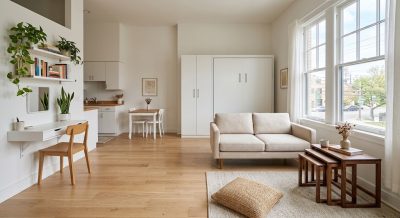
Short on time? The pieces that give you the most floor back are a storage or loft bed, a fold-down desk, a sofa bed or daybed, nesting tables, tall wall shelving, and a few mirrors to bounce light around. Everything below explains how to make each one work in real life, including the annoying parts nobody mentions.
Start With the Biggest Space Hog: Your Bed
Let’s be honest for a second. In a studio, the bed is the elephant in the room, and it’s usually sitting right in the middle of it. Deal with it first and everything else gets easier.
Space Saving Furniture Ideas: Storage Beds
A frame with built-in drawers or a lift-up base hides a surprising amount: off-season sweaters, spare sheets, that suitcase you only use twice a year. If I could recommend only one piece of small space furniture to a friend, this would be it. It’s boring, it’s practical, and it works.
Loft Beds
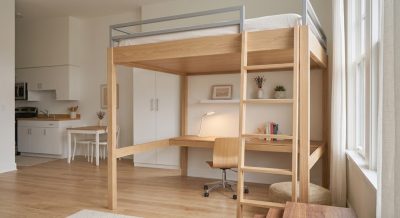
Got a ceiling of at least 8.5 to 9 feet? A loft bed lets you tuck a desk, a sofa, or a wardrobe underneath, which is about as close as you’ll get to building a second floor. Here’s the catch, though. Climbing a ladder every night is basically a tiny workout, and it gets old fast when you’re half asleep or nursing a cold. Some people adore sleeping up near the ceiling. Others find it stuffy and a little claustrophobic. Try one out in a showroom before you commit.
Murphy Beds (Wall Beds)
A Murphy bed folds into the wall, and in about thirty seconds your bedroom becomes a living room. It costs more upfront, no way around that, but nothing else frees up as much floor. Many newer models come with built-in shelves or even a sofa, which makes the price easier to swallow.
space saving furniture ideas for tiny studio apartments: Living Areas
Your living area has to handle lounging, guests, and probably some laptop time too. So choose pieces that can switch roles.
Space Saving Furniture Ideas: Choose a Sofa That Does Two Jobs
A sofa bed, daybed, or storage ottoman gives you seating by day and a place for a friend to crash at night. Look for raised legs and slim arms. When you can see the floor running underneath, the whole room feels lighter, and trust me on this one, it makes a bigger difference than you’d expect.
Use Nesting and Lift-Top Tables
Nesting tables come out when you need surface space and slide away when you don’t. A lift-top coffee table does something similar, rising to desk or dining height and dropping back down afterward. Sounds familiar? Most of us have eaten dinner hunched over a low coffee table at some point, and a lift-top fixes that neatly.
Go With Multifunctional Furniture
The trick is finding pieces with a hidden second purpose. Storage ottomans, benches with shoe cubbies, coffee tables with shelves underneath, and console tables that extend into dining tables all earn their keep. In my experience, anything that hides clutter and holds a drink at the same time wins.
Make Room for a Work-From-Home Setup
You don’t need a full office. You need a surface, a decent chair, and a way to make it all disappear at six o’clock.
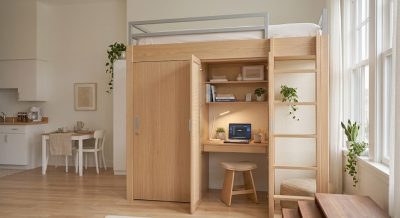
A wall-mounted fold-down desk sits flat against the wall when closed and holds up fine when open. If you’d rather keep a permanent desk, a slim console about 12 to 16 inches deep fits behind a sofa or along a short wall. My favorite trick, though, is the closet office: take the doors off, add a shelf at desk height, and you’ve got a hidden workspace you can close off after hours.
Pair whichever you choose with a folding or stackable chair. This helps your head as much as your floor. Packing the laptop away tells your brain the workday is over, which is hard to pull off when your desk sits three feet from your pillow.
Eating and Hosting in a Studio
Most studios simply don’t have room for a proper dining set, and honestly, that’s fine.
A drop-leaf table stays slim against the wall and opens up when friends come over. Bar-height wall shelves double as breakfast counters. Folding chairs can hang on wall hooks so they stay out of the way. If you host often, pick a small round table with a pedestal base. It’s far easier to squeeze around than a square one with corner legs, and your hips will thank you.
Use Your Walls Like Real Estate
When the floor runs out, look up. Walls are the most wasted space in any studio, and most people forget about them entirely.
Space Saving Furniture Ideas: Vertical Storage
Tall, narrow bookcases draw the eye upward and hold far more than a wide, low unit. Anchor them to the wall, though. A wobbly bookcase in a room this small is a problem you really don’t want.
Space Saving Furniture Ideas: Floating Shelves
Floating shelves hold books, plants, and kitchen odds and ends without taking a single inch of floor. Try running one above a door or window, which turns dead space into storage.
Space Saving Furniture Ideas: Wall-Mounted Everything
Wall-mounted nightstands, desks, and TV mounts all keep the floor visible, and the more floor you can see, the bigger the room feels. It’s a small visual trick with a surprisingly big payoff.
Define Zones Without Building Walls
A studio can feel like one big, confusing blob. Zones fix that without any construction.
A low, open bookshelf makes a great divider between the bed and living area. A rug under the seating area marks it as its own space. And if you want to hide the bed when guests visit, a curtain or folding screen does the job in seconds. Open dividers beat solid ones every time, since they let light travel through the room instead of blocking it.
Small Design Choices That Make a Big Difference
Furniture matters, but the details matter too.
- Keep the palette light. Whites, soft neutrals, and pale woods reflect light and make walls feel farther away.
- Add mirrors. A large one across from a window can nearly double the light in the room.
- Choose furniture on legs. Visible floor reads as extra space.
- Skip bulky arms and thick frames. Slim profiles carry less visual weight.
- Watch the scale. One oversized sofa will hurt more than three small pieces will help.
Common Mistakes to Avoid
I’ve made most of these myself, so no judgment here.
- Buying before measuring. Measure the room, the doorways, and the stairwell too. Then mark each piece’s footprint on the floor with painter’s tape and live with it for a day.
- Filling every inch. Empty space is part of the design. Leave room to breathe, and to walk.
- Ignoring storage. Without hidden storage, clutter wins every time.
- Choosing looks over function. That gorgeous fold-out table you dread unfolding will stay folded forever.
- Buying too many tiny pieces. A handful of well-chosen items beats a dozen small ones that all compete for attention.
A Simple Step-by-Step Plan
- Measure everything, ceiling height included.
- List your must-haves: sleeping, working, eating, storing.
- Pick one hero piece, like a Murphy bed or loft bed, to free up the most floor.
- Add multi-purpose items that cover two jobs each.
- Go vertical with shelves and wall mounts.
- Edit ruthlessly. If something doesn’t earn its space, it goes.
Final Thoughts
A tiny studio isn’t a limitation. It’s a puzzle, and honestly, solving it is half the fun. Start with the bed, add furniture that works double duty, put your walls to work, and keep everything light and open. With the right space saving furniture ideas for tiny studio apartments, you can sleep, work, and host in one room without ever feeling boxed in.